


school
curriculum
The curriculum overviews for each year group can be found under ‘Pupils’ section on the school website.
If you would like more information about the curriculum at Avanti House, please feel free to contact our Curriculum Lead, Timothy Burns at timothy.burns@avanti.org.uk
Please click the link below to view our whole school curriculum overview – this is a working document as we continually refine and enhance our curriculum offer to provide the best possible opportunities for our pupils.
Avanti House Primary School Curriculum Overview AST Framework

Early Years Curriculum – what will my child learn?
In September 2012 a new Statutory Framework for the Early Years Foundation Stage (EYFS) was introduced. In this new framework changes have been made to the areas of learning. The new areas of learning are listed below. These areas are covered in Nursery and Reception phases. There are two main aspects called Prime Areas of Learning (the most important building blocks of learning) and Specific Areas of Learning (focused on specific subject areas).
Prime Areas of Learning (Important Building Blocks of Learning)
Communication & Language Development: involves giving children opportunities to experience a rich language environment; to develop confidence and skills in expressing themselves; and to speak and listen in a range of situations.
Physical Development: involves providing opportunities for children to be active and interactive; to develop their coordination, control and movement; children taught to value and understand importance of physical activity as part of a healthy lifestyle, including food choices.
Personal, Social & Emotional Development: involves helping children develop a positive sense of themselves and others; to form positive relationships with adults and children; respect for each other; develop social skills and learn how to manage their feelings; to understand appropriate behaviours in groups.
Specific Areas of Learning
Literacy Development: linking sounds and letters to beginning to read and write. Phonics is a way of teaching children to read.
Mathematics: developing skills in counting, understanding and using numbers, calculating using simple addition and subtraction problems; describe shapes, spaces and measurements.
Understanding The World (Humanities & Sciences): guiding children to make sense of their world; explore, observe and find out about people, places and the environment.
Expressive Arts & Design: opportunities for sharing their thoughts, ideas and feelings through art, music, dance, role play, movement and design and technology.
Curriculum Map
Please refer to the Reception page on the Pupils Tab to view the yearly and termly curriculum overviews.

Subject lead Mrs Higley

About the Key Stage 1 Curriculum
Throughout Key Stage 1, pupils will continue to develop a love of reading, through an effective balance of synthetic phonics, drama, speaking and listening tasks, guided reading and storytelling. We use ‘Twinkl Phonics’ which is a DfE validated full systematic, synthetic phonics programme that contains everything we need to deliver phonics teaching to children from the very beginning of learning to read and write to full fluency. We know that pupils who can communicate orally and in writing, and who understand the value and pleasure of reading, are more likely to have happy, fulfilling academic and personal lives.
With these skills, pupils will access a broad and balanced curriculum that includes:-
English
-
Mathematics
-
Science
-
Arts (Music, Art, Dance and Drama)
-
ICT (Information and Communications Technology)
-
Physical Education (PE)
-
Humanities
-
Yoga and Meditation
-
Sanskrit
-
Spanish
-
PSHE (Personal Social Health and Economic education)
-
Philosophy Religion and Ethics
We aim to enrich the curriculum with memorable learning experiences, including educational visits and outdoor learning opportunities.
Pupils will be largely taught together in their class but will be supported by focused interventions, where needed, so that no child is left behind. The topic-themed approach to planning will be enriched further by discrete special events including annual Science Week, National Storytelling Week, Maths Days etc. As a school specialising in Mathematics and Performing Arts, we aim to provide extra opportunities for pupils to expand their knowledge and understanding in these areas. All pupils will take part in performances and key skills in Mathematics will be secured by high-quality teaching.
By the end of Key Stage 2, we aim for all our pupils to have the confidence, resilience and increasing maturity to deal with changes in school and at home, whatever they may be. We expect them to have developed: a love of reading; a thirst to enquire, ask questions and find out; positive relationships; good behaviour; and key maths, musical and artistic skills to prepare them for their next phase of education.
Our compassionate and caring pastoral approach, based on the teachings of Hindu scriptures, will encourage all pupils to reflect on their own faith or belief system, to explore their spirituality and enter the Secondary phase of education with a reflective, critical thinking and compassionate mind. We want them to understand the impact of their choices on themselves, on others and on their environment, both locally and globally. We expect them to be positive contributors as British and World citizens.
Subject lead Mrs Armitage
Optional key stage 1 tests: 2024 English grammar, punctuation and spelling test materials
Optional key stage 1 tests: 2024 English grammar, punctuation and spelling test modified materialsOptional key stage 1 tests: 2024 English reading test materials
Optional key stage 1 tests: 2024 English reading test modified materials
Optional key stage 1 tests: 2024 mathematics test materials
Optional key stage 1 tests: 2024 mathematics test modified materials
Key stage 1 tests: 2023 English grammar, punctuation and spelling test materials
Key stage 1 tests: 2023 English grammar, punctuation and spelling test modified materials
Key stage 1 tests: 2023 English reading test materials
Key stage 1 tests: 2023 English reading test modified materials
Key stage 1 tests: 2023 mathematics test materials
Key stage 1 tests: 2023 mathematics test modified materials
Key stage 1 tests: 2022 English grammar, punctuation and spelling test materials
Key stage 1 tests: 2022 English grammar, punctuation and spelling test modified materials
Key stage 1 tests: 2022 English reading test materials
Key stage 1 tests: 2022 English reading test modified materials
Key stage 1 tests: 2022 mathematics test materials
-

About the Key Stage 2 Curriculum
Throughout Key Stage 2, pupils will continue to develop a love of reading, through an effective balance of synthetic phonics, drama, speaking and listening tasks, guided reading and story telling. We know that pupils who can communicate orally and in writing, and who understand the value and pleasure of reading, are more likely to have happy, fulfilling academic and personal lives.
With these skills, pupils will access a broad and balanced curriculum that includes:
-
English
-
Mathematics
-
Science
-
Arts (Music, Art, Dance and Drama)
-
ICT (Information and Communications Technology)
-
Physical Education (PE)
-
Humanities
-
Yoga and Meditation
-
Sanskrit (Years 4, 5 and 6)
-
Spanish
-
PSHE (Personal Social Health and Economic education)
-
Philosophy Religion and Ethics
We aim to enrich the curriculum with memorable learning experiences, including educational visits and outdoor learning opportunities.
Pupils will be largely taught together in their class but will be supported by focused interventions, where needed, so that no child is left behind. The topic-themed approach to planning will be enriched further by discrete special events including termly Maths Challenge Days and an annual Creativity Week. As a school specialising in Mathematics and Performing Arts, we aim to provide extra opportunities for pupils to expand their knowledge and understanding in these areas. All pupils will take part in performances and key skills in Mathematics will be secured by high-quality teaching.
By the end of Key Stage 2, we aim for all our pupils to have the confidence, resilience and increasing maturity to deal with changes in school and at home, whatever they may be. We expect them to have developed: a love of reading; a thirst to enquire, ask questions and find out; positive relationships; good behaviour; and key maths, musical and artistic skills to prepare them for their next phase of education.
Our compassionate and caring pastoral approach, based on the teachings of Hindu scriptures, will encourage all pupils to reflect on their own faith or belief system, to explore their spirituality and enter the Secondary phase of education with a reflective, critical thinking and compassionate mind. We want them to understand the impact of their choices on themselves, on others and on their environment, both locally and globally. We expect them to be positive contributors as British and World citizens.
Curriculum Maps
See individual year group pages under ‘Pupils’

Subject lead Mr Savill
Key Stage 2 Past Papers 2022 to 2024
-
Key stage 2 tests: 2024 English grammar, punctuation and spelling test materials
-
Key stage 2 tests: 2024 English grammar, punctuation and spelling test modified materials
-
Key stage 2 tests: 2024 English reading test modified materials
-
Key stage 2 tests: 2023 English grammar, punctuation and spelling test materials
-
Key stage 2 tests: 2023 English grammar, punctuation and spelling test modified materials
-
Key stage 2 tests: 2023 English reading test modified materials
-
Key stage 2 tests: 2022 English grammar, punctuation and spelling test materials
-
Key stage 2 tests: 2022 English grammar, punctuation and spelling test modified materials
-
Key stage 2 tests: 2022 English reading test modified materials
-

What does Maths look like at AHPS (Intent)
At Avanti House Primary School, we are committed to nurturing enthusiastic, creative, and confident mathematicians. Our inspiring maths curriculum is designed to spark curiosity and develop key skills like problem-solving, resilience, and reflection, supporting growth across all areas of learning. We believe every child should feel both challenged and supported on their learning journey, from Early Years to Year 6. Our approach fosters courage, respect, and self-discipline as students build fluency in mathematics and deepen their understanding of connections between concepts.
We encourage children to think critically, reason logically, and express ideas clearly, ensuring they approach maths with curiosity and confidence. At Avanti House, we view mistakes as valuable learning opportunities and create a safe, supportive environment where students are empowered to explore and discuss ideas with empathy. Through collaborative group work and discussions, children develop the ability to articulate their thinking and reflect on their learning, building integrity and making meaningful connections to the world around them.
How do we do this? (Implementation)
In our maths lessons, we focus on building strong foundations with key vocabulary and essential skills like place value and the four operations. We use a variety of activities to encourage reasoning, allowing children to apply and deepen their understanding. Lessons are designed to cover all key topics, using resources like White Rose Maths and Deepening Understanding to support learning.
We also value the importance of speaking and listening, with daily ‘Talk Tasks’ to encourage conversation around maths. Our lessons balance fluency, problem-solving, and reasoning, and we make sure to revisit prior learning to reinforce concepts.
We use different teaching methods, such as Concrete, Pictorial, and Abstract, to help children grasp mathematical ideas and make connections. Misconception slides help address common errors, and learning is tailored to meet the needs of every child. Weekly real-life investigations inspire children to apply their maths skills, and homework supports ongoing learning.
What difference does it make? (Impact)
By providing engaging and meaningful maths lessons, children at Avanti House Primary learn to explain their thinking clearly and make connections across different areas of maths, seeing its relevance in both the classroom and the real world. Our lessons incorporate a variety of resources and representations of concepts, helping children understand ideas from different perspectives. We track each child’s progress to ensure they are supported and achieving their best, providing tailored support where needed.
In addition to academic growth, we focus on developing character virtues, encouraging reflection on personal development. This approach nurtures the ‘whole child,’ fostering not only academic skills but also the attitudes and values that will help them succeed in all areas of life. At Avanti House, we are committed to helping every child thrive in maths and beyond, preparing them for success now and in the future.

Subject lead Ms Pearman-Eddon

Make Maths Fun with Games
Use board games, card games, or apps that involve numbers and basic arithmetic. Games like “Math Bingo,” “Uno,” or “Dominoes” can encourage math practice while being enjoyable.
Incorporate Maths into Daily Activities
Use everyday situations to teach math, such as cooking (measuring ingredients), shopping (calculating prices or comparing amounts), or estimating distances (when traveling).
Practice Times Tables
Help children memorize their times tables with songs, rhymes, or flashcards. Use repetition and reward progress to keep them motivated.
Use Puzzles and Brain Teasers
Introduce number puzzles, Sudoku, or logic games to build problem-solving skills. These activities challenge their thinking and improve their ability to reason mathematically.
Create a Math-rich Environment
Label objects around the house with their shapes, sizes, or quantities. For example, mark the sides of furniture with measurements or create a wall chart of numbers and addition facts.
Ask Guiding Questions
Instead of simply giving answers, ask open-ended questions that encourage thinking, such as, “How would you solve this problem?” or “What could you do next to make it easier?”
Use Technology and Educational Apps
Use online tools or apps that offer interactive math exercises and games. Many platforms tailor activities to a child’s learning level, from simple addition to complex fractions.
Use Physical Objects for Visualization
Use items like coins, blocks, or buttons to demonstrate math concepts. Seeing and touching objects helps children better understand abstract ideas such as addition or subtraction.
Set a Regular Math Routine
Dedicate a few minutes each day to math practice. Whether it’s doing homework together or a math-related activity, consistency helps reinforce concepts and keeps children engaged.
Encourage a Growth Mindset
Promote a positive attitude by praising effort and perseverance. Remind children that mistakes are part of learning, helping them build resilience and confidence in their math abilities.

What does Geography look like at AHPS? (Intent)
At Avanti House Primary School, our Geography curriculum is designed to spark curiosity and a lifelong fascination with the world and its people. We follow the CUSP model curriculum, which carefully sequences key knowledge and vocabulary to build on each child’s understanding. By enriching the national curriculum with carefully chosen topics, we ensure that all pupils can see themselves in the curriculum and develop a strong sense of connection to life in modern Britain.
Through Geography, our pupils explore diverse places, people, resources, and environments, while deepening their understanding of the Earth’s physical and human processes. Our aim is to inspire every child to appreciate the world’s complexity and beauty, empowering them with skills and knowledge that are transferable both throughout their school life and beyond.
How do we do this? (Implementation)
We bring Geography to life through a blend of engaging lessons, fieldwork, and interactive resources. Our curriculum is centred around four key themes: fieldwork and geographical skills, locational knowledge, human and physical geography, and place knowledge. As pupils progress, the subject knowledge becomes more specific, and their skills deepen, ensuring learning is cumulative and builds over time.
Fieldwork is an essential part of Geography at AHPS. By exploring local environments, pupils experience hands-on learning, investigating physical and human geography in real-world contexts. This fosters a sense of curiosity and enables them to make meaningful connections between their studies and the world around them.
We also place a strong emphasis on vocabulary, introducing key terms at every stage of learning. Knowledge Organisers and glossaries support pupils in mastering concepts and vocabulary, while our use of high-quality texts encourages children to explore Geography through engaging stories and informational resources.
Finally, we integrate environmental awareness and role models into our lessons, inspiring pupils to think about their role as global citizens and how they can positively impact the world.
What difference does it make? (Impact)
Our Geography curriculum equips pupils with a deep understanding of the world and the skills to explore it confidently. Children leave AHPS with a strong knowledge of where places are, what they are like, and how human and physical processes shape the environment.
Pupils develop the ability to express well-informed opinions about societal and environmental issues, rooted in a strong foundation of knowledge and understanding. They also learn to draw and interpret maps, use geographical vocabulary accurately, and apply critical thinking to global challenges.
Through engaging fieldwork and practical learning experiences, pupils gain confidence in exploring their local area and the wider world. They develop their curiosity, analytical skills, and an appreciation for the interactions between people and the environment, preparing them for future studies and fostering a lifelong love of Geography.
How to support your child at home
Parents can play a key role in supporting their child’s learning in Geography. Here are some ideas to help:
-
Engage in discussions about places—talk about countries, cities, environments, and habitats that interest your child.
-
Have maps or a globe available at home, and encourage your child to explore them. Ask them what they know and what they’d like to learn more about.
-
Compare human and physical features in different areas, such as natural landscapes and cityscapes, to spark curiosity.
-
Encourage your child to read books or watch documentaries about the world, geography, or the environment.
-
Go on family walks or trips to explore your local area—point out rivers, hills, or urban features and discuss how these came to be.
-
Foster environmental awareness by discussing topics such as recycling, conservation, and the importance of protecting natural habitats.
-
Link Geography to current events by exploring global news stories and discussing their geographical impact.
By making Geography a part of everyday conversations and activities, you can help your child develop a deeper understanding of the world and a love for exploring it.

Subject lead Mr Nichols
-

What does Computing look like at AHPS? (Intent)
At Avanti House Primary School, we want to prepare children for the future by helping them develop the skills and knowledge they need for our ever-changing digital world. Our Computing curriculum covers digital literacy, computer science, and information technology, giving children the confidence to use and understand technology safely and responsibly. Through fun and engaging lessons, we build their skills step by step, ensuring they feel confident and capable. Computing also sparks creativity and supports learning across other subjects, making it an exciting part of the curriculum. We aim to inspire children to embrace technology as a tool for learning and creativity.
How do we do this? (Implementation)
At Avanti House Primary School, we make Computing exciting and accessible with weekly lessons, using a curriculum based on the Teach Computing framework. This ensures children build essential skills in computer science, information technology, and digital literacy. Through hands-on learning, pupils develop their problem-solving abilities by coding, creating projects, and using technology confidently. We also use Discovery Education to teach block coding, allowing children to create their own games in a fun, visual way. By the end of their time with us, children will be confident, creative users of technology, ready to tackle the digital world and continue their learning journey.
What difference does it make? (Impact)
At Avanti House Primary School, we nurture children’s confidence and creativity in Computing, encouraging them to explore, solve problems, and develop their skills. We regularly check progress through pupil feedback, lesson observations, and skill reviews, ensuring learning is engaging and effective. By the time they leave us, children will feel enthusiastic and capable, using computational thinking to tackle challenges and create their own digital projects. They’ll understand both the opportunities and risks of technology, equipping them to use it safely and responsibly. Most importantly, they’ll transition to secondary school with a love for learning and a passion for Computing.
How to support your child at home.
-
Encourage your child to explore block coding through online platforms like Discovery Education and Scratch, where they can create simple programmes and games.
-
Discuss e-safety, emphasising the importance of staying safe online, keeping personal information private, and knowing how to report inappropriate content.
-
Help your child understand data handling by talking about how information is collected, stored, and used.
-
Encourage creativity by supporting them in making digital art, videos, or presentations, using different media to express themselves.
-
Provide opportunities for your child to practise and develop their digital skills in a fun and engaging way.

Subject lead Mrs Carr
Here you will find videos on how to use our online platforms. To begin with, in our current situation and the possibility of being shut, the following video will show you how to log on, access your classroom, view and submit homework. We hope you find this useful if you get stuck whilst you are working from home.
Google Classroom Guide
YouTube Channels to check out:
-
https://www.youtube.com/channel/UC4KN50fal7f45fx2DqG7ttg – BBC Teach
-
https://www.youtube.com/user/thebodycoach1-TheBodyCoach TV
-
https://www.youtube.com/user/ArtforKidsHub – Art for kids
-
https://www.youtube.com/watch?v=SF71ks5FrKQ&t=14s – Crafts with paper
-
https://www.youtube.com/watch?v=kYA6GLAzz9A – Using google slides
-
https://www.youtube.com/playlist?list=PL_iwD7O7FG7g0-c62hSxKOeG60lLX2Nse – How to videos on using google features
-

Writing
What does Writing look like at AHPS? (Intent)
At Avanti House Primary School, our mission is to nurture children who are confident and creative communicators, ready to thrive as lifelong learners and make a positive impact on the world. We’re passionate about fostering a genuine love of language and reading, ensuring every child feels inspired by the power of words. Through our engaging text-based approach, we make learning enjoyable and meaningful. Our curriculum is thoughtfully designed to reflect the goals of the National Curriculum for English, seamlessly integrating language skills into both English lessons and across all subjects, giving your child a well-rounded education.
How do we do this? (Implementation)
We are dedicated to helping our students become confident and passionate writers, able to express themselves in many different styles and situations. Our lessons are filled with exciting opportunities to:-
Explore cross-curricular connections that bring writing to life through our class topics.
-
Write for a variety of purposes and audiences, helping children see the value of their words in different contexts.
-
Engage in meaningful writing tasks that are designed to capture their interest and show how writing skills can be applied in the real world.
-
Dive into a rich mix of genres throughout the year, sparking creativity and broadening their writing abilities.
-
Strengthen grammar skills, weaving them naturally into lessons and providing focused teaching when necessary.
-
Take part in “Talk for Writing” activities like role play, hot seating, and creating actions, making writing even more fun and interactive.
With these approaches, we aim to inspire every child to write with confidence and enthusiasm!
What difference does it make? (Impact)
At Avanti House Primary School, we believe that every child progresses at their own pace, starting from where they are and building on their unique strengths. As they grow, they will become confident writers, able to express their ideas clearly, accurately, and coherently. They’ll learn to adapt their language and style to suit different contexts, purposes, and audiences, ensuring their writing always shines.
By the end of Year Six, our pupils will not only write with clarity and precision, but they will also be able to tailor their writing to meet a variety of needs. With an extensive vocabulary and a strong command of the written word, they will develop a true love of writing that will serve them well throughout their education and beyond. Most importantly, they will be ready to use their writing skills to make a positive difference in the world!
How to Support Your Child at Home:-
Use VCOP (Vocabulary, Conjunctions, Openers, Punctuation) to help your child uplevel their writing. Encourage them to experiment with different words, sentence structures, and punctuation to make their writing more exciting and engaging.
-
Write diaries and recounts together: Encourage your child to write about their day, special events, or family holidays. This not only helps with writing practice but also encourages reflection and creativity.
-
Enter creative writing competitions: Inspire your child to take part in local or online creative writing competitions. This gives them a fun, goal-oriented way to practise writing and boosts their confidence.
-
Read together regularly: Reading is a great way to inspire writing. Share stories, poems, or articles and discuss the different writing styles and techniques used. This can spark new ideas for their own writing.
-
Create a writing space: Set up a special, quiet place at home where your child can focus on writing. This will help them develop a routine and treat writing as a creative and enjoyable activity.
-
Discuss different writing styles: Talk about various forms of writing like letters, poems, instructions, and stories. Help your child experiment with these styles to see how versatile writing can be.
-
Celebrate their writing achievements: Praise their efforts and display their writing around the home. When children feel proud of their work, it motivates them to keep writing.
By actively engaging with your child’s writing journey, you can help nurture their skills and foster a love for expressing themselves through words!
Reading
What does Reading look like at AHPS? (Intent)
At Avanti House Primary School, reading is at the heart of our curriculum. We are passionate about helping our children become articulate, imaginative communicators, equipped with the skills they need to become lifelong learners and make a positive impact on the world. Our goal is to nurture a genuine love for language and the written word by providing a literacy-rich environment, high-quality texts and inspiring learning opportunities.
By the end of their primary school journey, we want all our children to read fluently and confidently, prepared to tackle any subject in secondary school. To help them achieve this, we encourage our pupils to read widely across both fiction and non-fiction genres. This not only broadens their knowledge of themselves and the world around them but also deepens their appreciation for reading, strengthens their understanding across the curriculum, and enhances their comprehension skills.
How do we do this? (Implementation)
At Avanti House Primary School, we encourage children to explore a wide range of genres, sparking their curiosity and love for reading. We help them build an extensive vocabulary and develop a strong understanding of grammar and linguistic conventions, all through fun, vocabulary-focused activities woven into daily lessons. This includes guided reading, introductions to key texts, and spelling practice.
We also aim to instil a deep appreciation for our rich and varied literary heritage, introducing children to a diverse selection of texts that celebrate the beauty of storytelling. Through ‘Talk for Writing’ opportunities, children are encouraged to use their voices creatively, exploring expression and expanding their vocabulary through role-play, discussions, and writing.
To make learning even more engaging, we create a “hook” for each text, sparking curiosity and excitement in every child. Discussion is key—by talking through their thoughts, ideas, and understanding, students clarify their thinking and learn to elaborate on their ideas clearly and confidently.
Throughout the year, we celebrate special themed weeks such as National Storytelling Week and World Book Day, offering fun, immersive experiences that inspire a love of stories and creativity.
What difference does it make? (Impact)
At Avanti House Primary School, our goal is to help children develop a true love for reading. The impact of this will be clear: they will make significant progress, sustain their learning, and acquire valuable skills that will serve them well in the future. With our well-established and thoroughly taught writing journey across both key stages, children will grow into confident writers. By the time they reach Upper Key Stage 2, they will be familiar with most genres of writing, and our teaching will focus on nurturing their creativity, honing their writer’s craft, and refining their grammar and punctuation skills.
Through termly assessments, we are proud to see that most children at Avanti House are meeting age-related expectations in English. Each year, we celebrate children who achieve greater depth in both reading and writing by the end of Key Stage 1, and we are committed to continuing this success through to Key Stage 2. All of the exciting new literacy initiatives we’ve introduced will play a key role in enhancing children’s learning and supporting their ongoing progress.
How to Support Your Child at Home:-
Read together daily: Set aside 20 minutes each day to read with your child. This shared time not only strengthens their reading skills but also fosters a love of books and stories.
-
Ask questions: After reading, discuss the story with your child by asking questions to check their understanding. This helps develop their comprehension and critical thinking skills.
-
Practice echo reading: Take turns reading aloud, with you reading a sentence or passage first, and your child echoing you. This method builds fluency and confidence in their reading.
By making reading a fun and interactive part of daily life, you’ll help your child grow into a confident and passionate reader!
List of Recommended books:
Recommended Books for foundation stage
Recommended Books for Year 1
Recommended Books for Year 2
Recommended Books for Year 3
Recommended Books for Year 4
Recommended Books for Year 5
Recommended Books for Year 6Subject lead Mrs Carr
This year’s theme was ‘Resilience and Courage’. Take a look at the video where you can see all of this year’s winners. The children worked extremely hard to showcase performing with resilience and courage, as well as writing poems based on resilience and courage. We are so very proud of all the children and in awe by the content they produced! We look forward to next year’s poetry week!
-

Reading
The National Curriculum (2014) states that the programmes of study for reading at key stages 1 and 2 consist of two dimensions:-
Word reading
-
Comprehension (both listening and reading)
It is essential that teaching focuses on developing pupils’ competence in both dimensions; different kinds of teaching are needed for each.
Skilled word reading involves both the speedy working out of the pronunciation of unfamiliar printed words (decoding) and the speedy recognition of familiar printed words. Underpinning both is the understanding that the letters on the page represent the sounds in spoken words. This is why phonics is emphasised in the early teaching of reading to beginners (i.e. unskilled readers) when they start school. See our phonics page for more information.
Good comprehension draws from linguistic knowledge (in particular of vocabulary and grammar) and on knowledge of the world. Comprehension skills develop through pupils’ experience of high-quality discussion with the teacher, as well as from reading and discussing a range of stories, poems and non-fiction.
All pupils must be encouraged to read widely across both fiction and non-fiction to develop their knowledge of themselves and the world in which they live, to establish an appreciation and love of reading, and to gain knowledge across the curriculum.
Reading widely and often increases pupils’ vocabulary because they encounter words they would rarely hear or use in everyday speech. Reading also feeds pupils’ imagination and opens up a treasure-house of wonder and joy for curious young minds.
Below are some documents containing questions you should aim to use whilst reading with your child to develop their comprehension. Please click on the links below to view.
Reading Comprehension Year 1
Reading Comprehension Year 2
Reading Comprehension Years 3 & 4
Reading Comprehension Years 5 & 6
List of Recommended books:
Recommended Books for foundation stage
Recommended Books for Year 1
Recommended Books for Year 2
Recommended Books for Year 3
Recommended Books for Year 4
Recommended Books for Year 5
Recommended Books for Year 6Subject lead Mrs Carr
The following videos will give some ideas of how and when to read regularly with your child. We hope it helps you and it supports your child’s love for reading!!
-

What is Phonics?
Phonics is a way of teaching children to read quickly and skilfully. They are taught how to:
– Recognise the sounds that each individual letter makes;
– Identify the sounds that different combinations of letters make such as /sh/ or /ee/; and
– Blend these sounds together from left to right to read a word.
Children can then use this knowledge to ‘decode’ new words that they hear or see. This is the first important step in learning to read.
A high level phonics programme also provides guidance on teaching words that cannot be phonetically decoded; these are known as tricky words or common exception words.
There are 44 phonemes, represented by 26 letters in a range of different combinations.
What does Phonics look like at AHPS? (Intent)
At Avanti House Primary School, we follow ‘Twinkl Phonics’ which is a DfE validated full systematic, synthetic phonics programme that contains everything we need to deliver phonics teaching to children from the very beginning of learning to read and write to full fluency. Twinkl Phonics is a scheme based on Letters and Sounds. It follows the same sounds order throughout Nursery and Reception and through the early weeks of Year 1. Teaching of Level 5 and 6 GPCs and suffixes have been spread out in Twinkl Phonics to give more even coverage throughout Year 1 and 2.
AHPS Phonics progression map PDF
How do we do this? (Implementation)
We teach phonics through a well-structured program (Twinkl DFE phonics) to ensure every child learns effectively. Our goal is to make phonics fun and accessible to all children.
What we aim to do:
-
Teaching discrete phonics daily (for Reception) and continuing into year 1 and 2 where needed.
-
Help children practice blending (sounding out words) for reading.
-
Use Rhino Reader and Bug Club books to support reading practice, helping with blending, fluency, and understanding what they read.
-
Teach children to segment (break down words) for writing.
-
Support children in remembering tricky words and common exception words that don’t follow regular phonics rules.
-
Make sure phonics lessons are tailored to each child’s needs, using fun and engaging activities that involve hearing, seeing, and doing.
-
For children who benefit from extra visual or hands-on support, we use signs from the Twinkl Phonics Scheme to help them learn through sight, sound, and movement.
-
Teach letter formation through the phonics program, making adjustments for children who need more hands-on learning.
-
Encourage children to use phonics skills in other subjects and in everyday life.
-
Focus on building foundational listening and speaking skills in Level 1 phonics. This helps children develop their vocabulary, setting them up for success in reading and writing.
What difference does it make? (Impact)
Research shows that when phonics is taught in a structured way – starting with the easiest sounds and progressing through to the most complex – it is the most effective way of teaching young children to read. It is particularly helpful for children aged 5 to 7.
Almost all children who receive good teaching of phonics will learn the skills they need to tackle new words. They can then go on to read any kind of text fluently and confidently, and to read for enjoyment.
Children who have been taught phonics also tend to read more accurately than those taught using other methods, such as ‘look and say’. This includes children who find learning to read difficult, for example those who have dyslexia.
How to support your child at home
There are many way to support your child at home. Please see below a glossary to help further help your understanding of Phonics and of the key vocabulary.
Key Vocabulary / Glossary
Phonemes: A phoneme is the smallest unit of sound
Graphemes: The grapheme is the letter used to represent the sound
Digraph: two letters used to make one sound (e.g. ch/ sh/ th)
Trigraph: three letters used to make one sound (e.g. igh/ ure/ air)
Split Digraph: A digraph in which the two letters are not adjacent (e.g. make/ bone/ like)
Vowel Digraph: A digraph that uses two vowels to make one sound (e.g. oo/ ai/ ee)
Consonant Diagraph: A digraph that contains two consonants (e.g. ck/ sh/ ch)
CVC: Consonant Vowel Consonant (c-a-t/ sh-ee-p)
Blending: Combining sounds together to read the word
Segmenting: Breaking up the sounds in a word to help spell the word
Homographs: Words that have the same spelling but differ in meaning and pronunciation, for example, a row of chairs or a row like an argument
Homophones: Words with common pronunciations but different spellings, for example, to / two / too or there / their
Syllable: One or more letters representing a unit of spoken language consisting of a single uninterrupted sound
Polysyllabic word: A word containing more than one syllable
Adjacent Consonant: Two consonants next to each other in a word, for example, trip or bend. These used to be known as ‘blends’ but must not be now. They need to be taught as separate sounds.
Please click on the links below to download documents which contain essential information and resources that will help you support your child in the development of their phonics, reading and writing:
Introduction to phonics powerpoint for parents and carers.pdf
Subject lead Mrs Carr
The following videos will give some ideas of how and when to read regularly with your child. We hope it helps you and it supports your child’s love for reading!!
Level 2 Twinkl Phonics Sounds and actions.
Level 3 Twinkl Phonics Sounds and actions.
Level 5 Twinkl Phonics Sounds and actions.
Demonstrates use of sound buttons, which is what we use in school, to support the children in their learning.
How to read words by blending individual sounds together.
Demonstrates use of sound buttons, which is what we use in school, to support the children in their learning.
-

What does Science look like at AHPS (Intent):
At AHPS, our Science curriculum ignites curiosity and wonder about the natural world, developing a lifelong passion for scientific inquiry. We aim to develop pupils’ scientific knowledge and conceptual understanding, whilst also equipping them with the scientific skills required to understand the uses and implications of science, today and for the future. Our curriculum builds a foundation of critical thinking skills, encouraging pupils to question, hypothesise and investigate the world around them. Through engaging, practical experiences, we make science accessible and enjoyable for all learners, connecting scientific concepts to real-world applications and helping pupils understand the vital role of science in addressing global challenges. Our curriculum draws from a rich variety of resources, including Pzaz, materials from the Association for Science Education, and STEM learning platforms. We ensure our content is inclusive, challenging and relevant to pupils’ lives beyond the classroom. Through practical investigations, collaborative projects and cross-curricular links, we empower our young scientists to:
-
Observe and explore natural phenomena
-
Ask questions and develop their own ideas
-
Plan and carry out scientific investigations
-
Analyse data and draw conclusions
-
Communicate their findings effectively
By the end of their primary education, our pupils will have developed a solid foundation in scientific knowledge and skills, preparing them for future academic pursuits and enabling them to make informed decisions in an increasingly scientific and technological world.
How do we do this? (Implementation)
Timetable
In EYFS, Science is integrated into the ‘Understanding of the World’ area of learning. Teachers in the EYFS connect the scientific elements of children’s activities to the
objectives outlined in the Early Learning Goals (ELGs).
– In KS1 and KS2, Science lessons are scheduled on a weekly basis.
– Science education follows a 36-week academic year, with instruction organised into teaching and learning blocks that encompass biology, chemistry, and physics.
– A dedicated Science week offers pupils the chance to engage collaboratively in various scientific endeavours, participate in a science investigations, attend workshops, and either perform in or observe an assembly centred on scientific breakthroughs.
Subject Leadership
The Science subject leader frequently reviews lesson plans, examines pupils’ work, and compiles evidence to showcase progress and achievement in Science. The subject leader works closely with individual teachers, year groups, and the whole school to ensure a unified and coherent approach across the curriculum.
Resources
Every classroom features a Science display that emphasises the current topic being studied by the class. Key scientific terminology is prominently featured to encourage pupils to use it in both spoken and written activities. Pupils’ work is often displayed to demonstrate expected standards of scientific learning and to highlight key concepts and principles.
Photographs of experiments or real-world scientific phenomena help make abstract ideas more tangible for pupils.
– A wide array of Science resources are available to support the teaching and learning process, including tools for demonstrating scientific concepts, such as models of skeleton. These resources are centrally stored to assist teachers in planning and delivering engaging and informative lessons.
– A variety of equipment is provided to help pupils learn how to accurately and precisely record data, including items like measuring cylinders, force meters, different types of rocks, magnets, and materials for electricity and light experiments.
– Comprehensive lesson plans are provided for each unit, with clear links to learning objectives that help pupils meet both individual and connected goals throughout each unit. The plans align with the knowledge and skills progression document across the year groups, which further supports effective Science instruction.
Enrichment
Educational trips are an essential component of the Science curriculum, bringing Science to life by offering real-world examples of scientific principles. Additionally, workshops are frequently brought into the school to give all pupils a richer learning experience.
Topics and Rationale
EYFS
Science is broadly taught through the ‘Understanding the World’ strand of the EYFS curriculum, with connections to other areas of learning. ‘Understanding the World’ is divided into ‘People and Communities’, ‘The World’, and ‘Technology’. Science is introduced through activities that encourage exploration, problem-solving, observation, prediction, thinking, decision-making, and discussions about the world. Children begin to explore animals, people, plants, and objects in their natural settings. They observe objects and materials to spot differences and similarities and use their senses for clearer observations. Children are encouraged to ask questions about how and why things work.
KS1
In Year 1, pupils start with the ‘Plants’ unit, where they learn to identify and name common local plants and understand the basic structure of plants by creating diagrams. They might record seasonal changes in plants, which ties into the ‘Seasonal Changes’ unit. Pupils engage in scientific activities by making weather tables and charts for different seasons. The ‘Animals Including Humans’ unit introduces pupils to various animal classifications and methods for comparing animal groups. They also begin to identify and label parts of the human body, relating them to the senses. In the ‘Use of Everyday Materials’ unit, pupils learn about the materials that everyday objects are made from and describe their physical properties. They conduct simple tests to answer questions about the characteristics and uses of different materials. In Year 2, the ‘Animals Including Humans’ unit allows pupils to learn about the basic needs of animals and the importance of healthy living for humans. They engage in scientific observation to see how animals grow and change. In the ‘Plants’ unit, they observe and describe how plants grow from seeds and bulbs. Pupils are introduced to comparative tests by investigating how various factors influence plant growth. In the ‘Living Things and Their Habitats’ unit, they learn what habitats are and how living things are adapted to their environments. Pupils then explore how the shapes of solid materials can be changed in the ‘Uses of Everyday Materials’ unit.
KS2
In Year 3, the ‘Plants’ unit helps pupils deepen their understanding of the essential requirements for plant life and growth, particularly how water is transported within plants. They also learn about the role of flowers in the life cycle of flowering plants. The ‘Animals Including Humans’ unit focuses on identifying the functions of skeletons and muscles in animals, and pupils begin to group animals with and without skeletons. In the ‘Light’ unit, pupils learn about the importance of light and explore concepts like reflection and shadow formation. The ‘Forces and Magnets’ unit introduces them to common forces affecting object movement and the interaction between objects. They begin identifying magnetic materials and making predictions about whether two magnets will attract or repel each other. In the ‘Rocks’ unit, pupils scientifically explore different types of rocks and soils, including those in their local environment. They use comparative skills to group rocks based on physical properties and understand rock formation. In Year 4, the ‘Animals Including Humans’ unit builds on prior knowledge about healthy living by teaching pupils about the correct types and amounts of nutrition, as well as comparing and contrasting diets of different animals. The ‘All Living Things’ unit expands on classification knowledge by introducing pupils to classification keys and recognising environmental changes that affect various species. They also consider the impact of human activity on the environment, linking this to their understanding of citizenship. The ‘States of Matter’ unit revisits materials and observes how they change state when heated or cooled. Pupils gain an understanding of temperature measurements and learn about chemical processes such as evaporation and condensation. The ‘Sound’ unit helps pupils identify how sounds are produced and relate them to the vibration of particles, recognising that vibrations must travel through a medium. Pupils investigate how different factors affect volume and pitch scientifically. In the ‘Electricity’ unit, pupils learn to use electrical symbols to represent circuit components. They create tests to determine if a lamp will light in a series circuit, based on different variables, and carefully observe patterns. They also learn to identify certain materials as insulators and conductors.
In Year 5, the ‘Animals Including Humans’ unit develops pupils’ understanding of changes that occur as humans grow older. They research and compare gestation periods across different animals. They describe differences in the life cycles of various animal groups and learn about reproduction in the ‘Life Cycles’ unit. The ‘Properties of Everyday Materials and Reversible Changes’ unit continues pupils’ understanding of material properties and changes by conducting tests. They learn that some materials dissolve and that this process can be reversed. They demonstrate reversible changes and identify how mixtures can be separated using different chemical processes. The ‘Earth and Space’ unit helps pupils describe the movement of planets relative to the Sun in the solar system and understand the Earth’s rotation to explain day and night. The ‘Forces’ unit revisits common forces, and pupils now explain gravity’s role in causing objects to fall towards the Earth. They conduct scientific tests to investigate the effects of air resistance, water resistance, and friction.
In Year 6, pupils learn to name and identify the function and main parts of the human circulatory system in the ‘Animals Including Humans / Water Transportation’ unit.
They build on their knowledge of healthy lifestyles by recognising the impact of lifestyle choices on body function. The ‘Evolution and Inheritance’ unit introduces the concept of genes and how they affect characteristics and cause variation within a species. Pupils expand on their understanding of adaptation by recognising how adaptation over time leads to evolution. They research theories of evolution and learn about examples highlighting the concept of survival of the fittest. They revisit their learning about fossil formation and progress to identifying how fossils provide evidence for evolution. The ‘All Living Things and Their Habitats’ unit further develops pupils’ ability to classify living things by observable characteristics, including micro-organisms. In the ‘Electricity’ unit, pupils associate the brightness of a lamp or the volume of a buzzer in a circuit with the voltage of cells. They continue to expand on their use of symbols for circuit components. The ‘Light’ unit helps pupils use the idea that light travels in straight lines to explain how objects are seen by emitting or reflecting light into the eye. They make predictions about the behaviour of light, including light sources, reflection, and shadows.
What difference does it make? (Impact)
Through our science curriculum, students will develop the following skills and
knowledge, ensuring they are well-prepared to explore the world scientifically and meet the National Curriculum standards:
• Develop early scientific thinking: Children in the Early Years Foundation Stage (Reception) will develop basic scientific thinking through practical and sensory based learning activities.
• Build a strong foundation: Students will acquire key knowledge in biology as specified in the National Curriculum, covering areas such as Plants, Animals (including humans), Living things and their habitats, and Evolution and inheritance. The curriculum will provide students with essential chemistry knowledge, focusing on topics like Everyday materials, Uses of everyday materials, Properties and changes of materials, States of matter, and Rocks. Pupils will explore core physics topics, including Seasonal changes, Forces and magnets, Sound, Light, Electricity, and Earth and space, building a strong foundation in the subject.
• Understand scientific methodologies: Students will learn to evaluate and recognise the methods employed by practising scientists to formulate and investigate scientific questions.
• Use scientific equipment effectively: Pupils will be taught how to accurately use scientific tools and equipment to gather, measure, and record data with reliability.
• Develop data representation skills: The curriculum will enable students to effectively present and communicate data in various forms, including graphs, enhancing their ability to convey scientific information.
• Analyse and interpret data: Through the curriculum, pupils will develop the skills to analyse data, classify, group, and identify patterns, aiding their understanding of scientific concepts.
• Draw conclusions from evidence: Students will be guided to use evidence to develop explanations and draw reasoned conclusions from their investigations.
• Enhance scientific literacy: Pupils will demonstrate their understanding by articulating scientific concepts and ideas clearly, using appropriate scientific terminology.
• Cultivate resilience and a growth mindset: The curriculum will emphasise the importance of resilience and a growth mindset, particularly in the context of scientific investigations, helping students to persist through challenges.
• Achieve national curriculum standards: The curriculum is structured to ensure that pupils meet the end-of-key-stage expectations outlined in the National Curriculum for science.
Science progression Map
Intent, Impact and Implementation
Curriculum Overview-Science-2024-25Subject lead Mrs Armitage
‘We are the newly elected science ambassadors for our school. We are excited to embark on this fantastic journey of celebrating good science. Over the next term and beyond, we will be supporting our teachers to make science even more exciting and adventurous at Avanti House Primary School.’
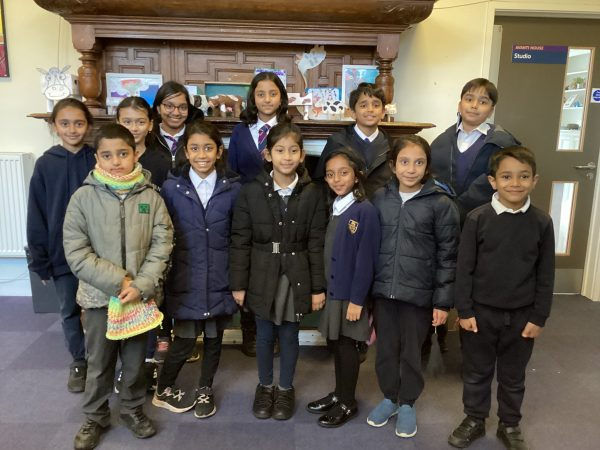
Our Eco-Warriors have a very important task this year – reducing the amount we print:

No Electricity Afternoon
The Eco Warriors championed a “No Electricity Afternoon,” encouraging everyone to reduce energy use by teaching without electronic devices. Teachers embraced the challenge creatively, using whiteboards, flip charts, outdoor investigations, and reading activities. Some classes engaged in hands-on art projects, science experiments, and group discussions. The initiative highlighted the importance of sustainability while showcasing the creativity of both staff and students. It was a great success and a wonderful way to explore alternative teaching methods!


Eco-Warriors in action!
Storms graced us with their presence earlier this week, making a little mess in our outdoor environment. Thanks to the Eco-Warriors from across the school and Mr Craig who (together) cleared the area of any unwanted objects or debris, it’s business as usual again. Thank you!


-

What does PE look like at AHPS? (Intent)
At our school, we aim to inspire a love for sport and physical activity in every child. We want them to enjoy the lifelong benefits of being active, from building friendships and teamwork to improving their health and enriching their social lives. By encouraging children to try a variety of activities, we open the door for each of them to discover the sports and physical pursuits they truly love.
We also focus on helping pupils understand the importance of safety, including building confidence in the water with essential swimming skills that could one day save a life. Through collaborative activities, children learn to communicate effectively, express themselves clearly, and develop the relationships and vocabulary they need to thrive.
Physical Education is about so much more than just staying active – it’s about helping every child grow. For some, it’s the chance to shine in ways they may not have discovered elsewhere. For all, it’s an opportunity to step outside the classroom, explore their potential, and develop into confident, well-rounded individuals.
How do we do this? (Implementation)
At Avanti House Primary, we are passionate about nurturing a love for physical activity and well-being in every child. Each week, our pupils enjoy an hour of P.E. as well as a calming 30-minute yoga session led by our qualified yoga teacher. Through a blend of competitive and non-competitive activities, we aim to instill a lifelong appreciation for staying active. Over the years, we introduce children to a variety of sports, including badminton, tennis, tag rugby, and football, and we proudly participate in inter-school events to encourage healthy competition and community spirit.
To promote daily activity, we encourage every child to take part in the Daily Mile and incorporate active learning within classroom lessons. This helps our pupils stay active while boosting their focus and energy throughout the school day.
Our P.E. provision is supported by Complete PE, a resource that provides high-quality lesson plans tailored to meet the unique needs of each child. Our teachers adapt lessons thoughtfully and are continually supported in developing their expertise through professional training, both in-house and from external specialists.
We are proud to be part of the Harrow Sports Partnership, giving our pupils the chance to compete with other local schools and take part in exciting community events. Additionally, our long-term sports plan connects children to local opportunities, including competitive events, so they can broaden their experiences beyond the classroom.
Children in Years 5 and 6 enjoy swimming lessons as part of the curriculum, helping them develop confidence and vital water safety skills. They also have the chance to visit The Vedanta, where they can take part in adventurous outdoor activities that build resilience, teamwork, and a sense of adventure.
At Avanti House Primary, we believe that physical education is about more than fitness – it’s about building character, confidence, and a lifelong love of movement.
What difference does it make? (Impact)
The implementation of initiatives such as the Daily Mile and increased opportunities for competitive sports competitions has significantly raised the profile of Physical Education, School Sport, and Physical Activity (PESSPA) across our school. These initiatives have become vital tools for whole school improvement, promoting physical health, enhancing student engagement, and fostering a positive school culture.
The Daily Mile encourages regular physical activity, boosting students’ concentration and readiness to learn. Additionally, competitive sports competitions cultivate teamwork, resilience, and school spirit, contributing to an inclusive and vibrant school environment.
PE Lead with CLT to work on increasing the number of pupils taking part in 2024-2025 through the links with HSSP as well as more local schools.
More pupils are keen and asking about further opportunities to get involved across the school.
The school will continue to invest in an external coach to support some teachers to further enhance their CPD in PE lessons to have a greater impact in the pupils learning. As a result, PESSPA is now a cornerstone of our holistic approach to education, supporting the physical, mental, and social development of our pupils.
We have also achieved the Bronze Award in both the Youth Sports Trust and Schools Games Mark (Harrow) to show the improvement in PESSPA across the school this academic year.
The PE Subject Lead takes feedback from pupils’ surveys and discussions, and planning is reviewed periodically to ensure we are still making progress in meeting our curriculum intent.
Children will be able to clearly articulate how to maintain healthy and active lifestyles and will be able to participate in a range of sporting activities with confidence. Children can apply skills learnt through extra-curricular activities as well as inter-school competition through the Harrow Schools Sports Partnership and inter-house activities/competitions within school as well.
Subject lead Mrs Armitage
https://www.youthsporttrust.org/join-us/family-hub
The link below has a range of activities to try at home:
https://www.youthsporttrust.org/resources/physical-challenges-for-kids/primary-pe-activities
Useful Links:
NHS Change For Life: https://www.nhs.uk/healthier-families/food-facts/
Action on Sugar: https://www.actiononsugar.org/sugar-and-health/sugars-and-tooth-decay/
Take care of your teeth and gums: https://www.nhs.uk/live-well/healthy-teeth-and-gums/take-care-of-your-teeth-and-gums/
Children’s Mental Health: https://www.childrensmentalhealthweek.org.uk/
Thank you for your support in encouraging an active and healthy school community!
Further Information
AHPS PE Curriculum Map & Progression of Skills 2025-2026
AHPS PE Intent, Implementation, Impact Document
AHPS PE Curriculum Map 2025-2026

Our Philosophy, Religion and Ethics curriculum is unqiue to Avanti. Its emphasis on critical thinking and mindfulness make it ground breaking. It gives pupils opportunities to deepen their own spiritual insight, consider the world’s major religious beliefs, deepen their knowledge of the distinctive Hindu tradition which inspires the school’s ethos and celebrate the common positive values which all faiths share.
Whilst the curriculum is rooted in the Chaitanya Hindu tradition, the intention is to learn comparatively, so that there is a dialogue about the similarities and differences across faiths and other world views, including humanist, naturalist and atheist.
Ofsted have commented about Avanti schools that, ‘provision in the school for spiritual, moral, social and cultural development is very strong.’ Our PRE-curriculum provides a platform from where pupils can discuss big life questions. Learning about how to live a life based on the Avanti values. Pupils and parents often comment on how PRE has helped pupils understand more about life and helps them to be a better person.
PRE plays a large role in the development of pupils spiritual insight.
“The basic principle of the living condition is that we have a general propensity to love someone. No one can live without loving someone else. This propensity is present in every living being. Even an animal like a tiger has this loving propensity at least in a dormant stage, and it is certainly present in the human beings. The missing point, however, is where to repose our love so that everyone can become happy.” – Srila Prabhupada
To be truly wealthy is to have a fulfilled heart, and that means to love and be loved. The joy of love is the true wealth inherent in all of us, and learning to recognize it is what spiritual insight is all about.
What you can do to support your child:
Here are some ways parents can support their children in PRE (Philosophy, Religion, and Ethics) at Avanti House Primary School:
-
Encourage Open Discussions: Engage in conversations about the topics covered in PRE, such as moral values, cultural practices, and religious stories. Ask open-ended questions to develop critical thinking.
-
Promote Core Values: Reinforce the school’s values of respect, empathy, and responsibility at home, aligning with the ethos taught in PRE lessons.
-
Participate in Activities: Join school-organised events, workshops, or assemblies related to PRE, such as festivals or community service initiatives. We also have a PRE Parent Taskforce who help with organising kirtan events and festival days at school. Please email the school office if you would like more information.
-
Provide Resources: Supply books, stories, or educational materials related to various religions, ethics, and philosophies to broaden their understanding.
-
Model Ethical Behavior: Demonstrate kindness, honesty, and fairness in daily life, serving as role models for ethical behavior.
-
Cultural Exploration: Expose children to diverse cultural and religious practices through visits to places of worship, museums, or cultural festivals.
-
Regular Communication with Teachers: Stay informed about the PRE curriculum and objectives by maintaining an open dialogue with teachers.
-
Encourage Reflection: Create moments at home for children to reflect on their learning and discuss how it applies to real-life situations.
These actions help reinforce the holistic approach to education fostered at Avanti House Primary School.
Withdrawal from PRE
Everything we do at Avanti aims to inspire spiritually compassionate changemakers. Our distinctive philosophy, religion and ethics curriculum intends to achieve this aim: through cultivating curiosity to explore life’s big questions with open hearts and minds, through religious learning to foster humility, love, and a sense of interconnectedness with all living beings and divinity, and through ethics to shape conscious changemakers who embody virtues and think critically. In so doing, we equip our children and young people with the tools to lead meaningful, joyful lives, and make a positive contribution in the world.
While parents and carers do have the right to withdraw their child from all or part of PRE (by contacting the school office), we believe that participation can greatly enrich children and young people’s understanding of the world and those around them.
Sri Sri Nitai Gaurachandra deities at Avanti House Primary School

as
Subject lead Mrs Armitage
-
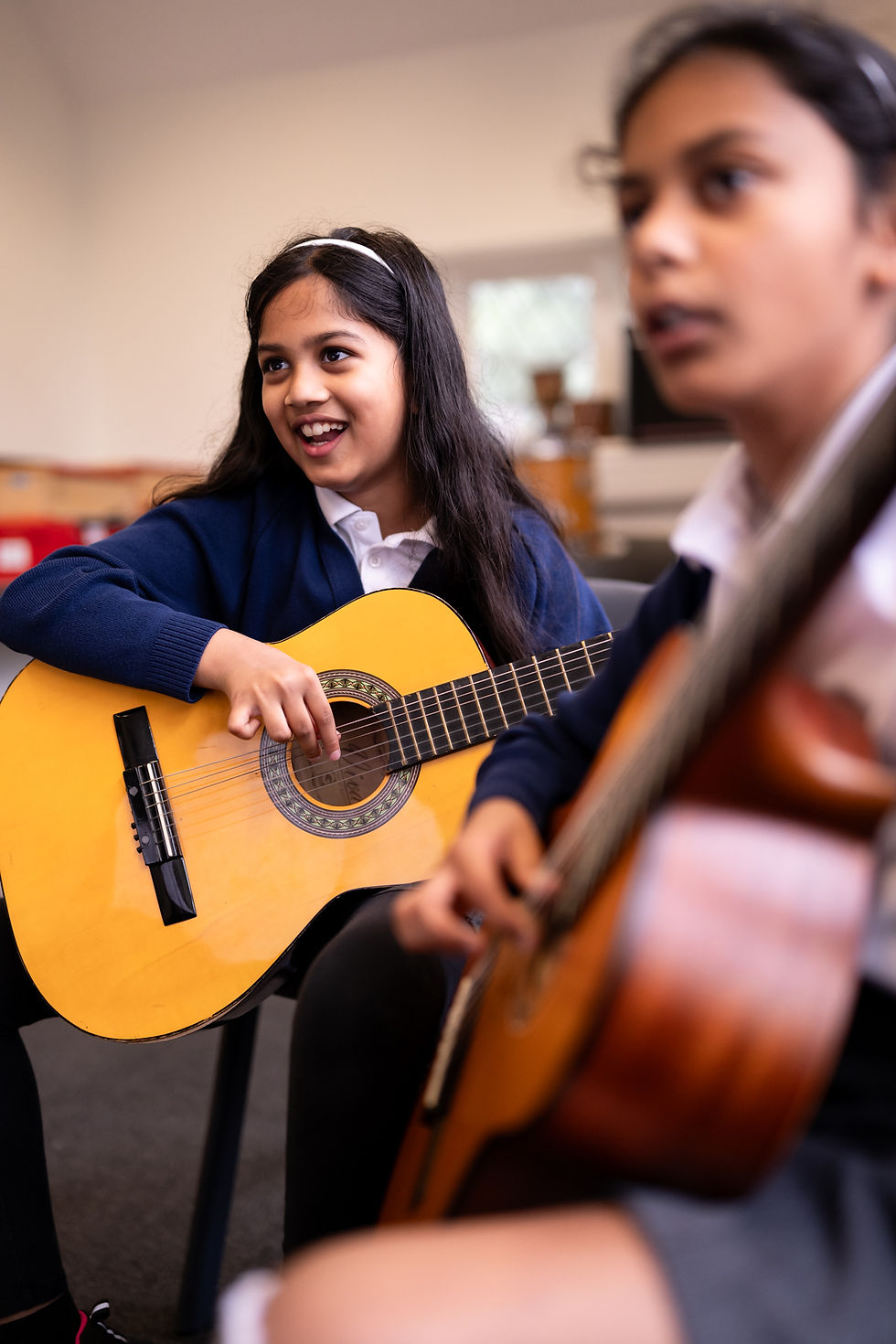
What does Music look like at AHPS? (Intent)
At Avanti House Primary School, our Music curriculum is designed to inspire creativity, self-expression, and a lifelong love of music. We aim to ignite our pupils’ passion for music by exposing them to a diverse range of musical experiences and providing opportunities to connect with others through shared musical activities.
We believe that music is a universal language, and by exploring it, our pupils can grow as confident singers, composers, and performers. Through listening, performing, and composing, they develop the skills to express themselves while fostering an appreciation for the beauty and variety of music.
Our partnership with Harrow Music Service enriches our curriculum, providing specialist-led weekly lessons to all KS1 and KS2 pupils. These lessons allow children to explore a wide range of instruments, such as African drums, samba percussion, ukuleles, and recorders, while embedding key skills outlined in the national curriculum. EYFS children engage in musical exploration and creation through continuous provision and specific music lessons led by classroom staff, with support from the music lead.
How do we do this? (Implementation)
Our Music curriculum enables pupils to sing, listen, play, perform, and evaluate in a structured and supportive environment. Weekly lessons, led by Harrow Music Service, ensure pupils gain hands-on experience with tuned and untuned instruments, building their confidence and technical skills. The curriculum covers essential elements of music, helping children understand how music is created, performed, and appreciated.
EYFS children explore music through both guided activities and self-initiated play in the continuous provision, supported by classroom staff and the music lead. As children progress through KS1 and KS2, they gain exposure to more structured music lessons, where they can experiment with instruments and explore a variety of musical styles and traditions.
Beyond the classroom, music is an integral part of our school life. Pupils participate in morning worship, concerts, and performances, where they can express themselves as individuals and as part of a group. Our school-wide singing assemblies and opportunities to perform during festivals and events allow pupils to experience the joy of making music together.
Children also learn to compose music using body percussion, vocal sounds, and instruments, fostering creativity and a deeper understanding of musical dimensions. The use of high-quality instruments provided by Harrow Music Service ensures that pupils can experiment and develop their skills across a variety of genres and styles.
What difference does it make? (Impact)
Music at AHPS enables pupils to embark on a personal musical journey, discovering their strengths and areas for growth. As they develop their musical skills, they also gain self-confidence, creativity, and the ability to work collaboratively with others.
Pupils leave AHPS with a strong understanding of music’s cultural and historical significance, as well as the technical skills to create, perform, and evaluate music confidently. They are equipped with the ability to feel and create rhythms, compose melodies, and interpret music using correct terminology.
Through their experiences, pupils build a lifelong appreciation for music, connecting to it as listeners, creators, and performers. They carry forward the joy and discipline of music-making, enriched by their understanding of its universal and cultural importance.
How to support your child at home
Parents play a vital role in nurturing their child’s love for music. Here are some ideas to encourage musical exploration at home:
-
Listen to music together from a variety of genres and styles, discussing the instruments used and what makes each piece unique
-
Encourage your child to take part in extracurricular activities such as our choir or instrumental music lessons (we offer guitar, violin, and drumming lessons at school)
-
Provide simple musical instruments or apps at home to inspire creative play and composition
-
Explore opportunities to attend live music events or watch performances online, helping your child experience music in different contexts
-
Discuss how music is part of their daily life, from worship and celebrations to films and traditions, to deepen their understanding of its cultural role.
By making music an enjoyable and regular part of family life, you can help your child develop a lifelong connection with this universal language.
Please select the link below to view our Music Development Plan summary for this academic year
AHPS Music Development Plan Summary 2024 2025Subject lead Mrs Armitage

‘We are the newly elected science ambassadors for our school. We are excited to embark on this fantastic journey of celebrating good science. Over the next term and beyond, we will be supporting our teachers to make science even more exciting and adventurous at Avanti House Primary School.’
-

What Does PSHE Look Like at Avanti House Primary School? (Intent)
At Avanti House Primary School, we believe in nurturing well-rounded, confident, and compassionate individuals who are ready to thrive in today’s diverse and ever-changing world. Our goal is for every child to leave us equipped not just with academic knowledge but with the understanding, skills, and emotional resilience they need to live happy and fulfilling lives.
Through our PSHE (Personal, Social, Health, and Economic) curriculum, we inspire children to dream big and believe in their potential. We want them to know that with determination and self-belief, they can achieve anything they set their minds to.
In a world that is constantly evolving, it’s essential for children to be aware of the challenges they may face and to develop the tools to navigate these confidently. We emphasize the importance of mental health and well-being, teaching children how to care for themselves and others while building positive relationships and making thoughtful choices.
Our PSHE lessons are designed to help children gain valuable knowledge and practical skills that extend far beyond the classroom. They prepare our pupils to embrace life as active, caring members of society—both now and in the future—equipped to make a positive difference in their communities and the wider world.
How Do We Bring PSHE to Life at Avanti House Primary School? (Implementation)
At Avanti House Primary School, we believe that fostering a Growth Mindset is key to helping children become resilient, independent, and confident learners. By encouraging them to embrace challenges, develop a love of learning, and view effort as a pathway to success, we aim to nurture happy and motivated individuals who are ready to thrive.
We bring this vision to life in the way we speak to and support our children. By celebrating their efforts, guiding them to think positively, and empowering them to persevere, we help shape their mindset and encourage them to see obstacles as opportunities. These principles align closely with our school and PSHE values, and we weave them into every aspect of school life.
PSHE is central to our curriculum and is often integrated into other subjects, ensuring its principles are a natural part of each child’s learning experience. Through PSHE, we help pupils develop their self-worth by contributing positively to both school life and the wider community. We also inspire them to actively demonstrate our core values of faith, hope, and love in their everyday actions.
Our approach includes special assemblies that connect PSHE themes with British Values and Character Virtues. These moments help deepen understanding and offer the whole school a chance to reflect and grow together.
Throughout the school, PSHE displays act as constant reminders of key lessons, encouraging children to make connections and put their learning into practice. Additionally, we offer parent workshops and consultations to ensure that families feel supported and informed about important PSHE topics.
By working together, we aim to create a strong foundation for our children’s personal growth and success—both now and in the future.
The Impact of PSHE at Avanti House Primary School (Impact)
At Avanti House Primary School, our PSHE teaching helps shape confident, thoughtful, and well-rounded individuals. Here’s what you can expect to see as a result of our PSHE approach:
-
Prepared for Life: Children can approach real-life situations with confidence, using the skills and values they’ve gained to navigate the challenges of modern life.
-
Active Citizens: Our pupils are on their way to becoming healthy, open-minded, respectful, and socially responsible members of society.
-
Celebrating Diversity: They develop a deep appreciation for difference and diversity, fostering inclusivity in all they do.
-
Living British Values: Children understand and embrace the British Values of democracy, tolerance, mutual respect, rule of law, and liberty.
-
Emotional Awareness: They learn to understand and manage their emotions, developing resilience and empathy.
-
Mental Well-being: Pupils are equipped to look after their mental health and well-being, building habits that support lifelong happiness.
-
Healthy Relationships: They develop positive, healthy relationships with peers, both now and in the future, grounded in respect and kindness.
-
Understanding RSE: Children gain an age-appropriate understanding of the physical aspects of relationships and sex education, guided by respect and sensitivity.
-
Self-Respect and Esteem: They cultivate respect for themselves and others, alongside a strong sense of self-worth.
-
Character Virtues: Children can identify and celebrate the character virtues they develop, supporting their growth as well-rounded individuals.
At Avanti House, our PSHE curriculum goes beyond the classroom. It nurtures the whole child, preparing them for a bright, compassionate, and fulfilling future.
How Parents Can Support PSHE Development at Home
Parents play a crucial role in helping children practice and develop the important life skills taught through PSHE. Here are five ways you can support your child at home:
-
Encourage Open Communication
Create a safe and supportive environment where your child feels comfortable sharing their thoughts and feelings. Listen without judgment, ask open-ended questions, and guide them to find solutions when they face challenges. -
Model Positive Behaviour
Children learn by observing adults. Demonstrate kindness, respect, and empathy in your interactions with others, whether it’s within your family, with neighbors, or in the wider community. Your example helps reinforce the PSHE values they learn at school. -
Foster Emotional Awareness
Talk to your child about their emotions and help them identify what they are feeling. Encourage them to use techniques like deep breathing, mindfulness, or journaling to manage stress and emotions effectively. -
Promote Healthy Relationships
Help your child develop social skills by encouraging teamwork, cooperation, and conflict resolution. Discuss the importance of respecting others’ opinions and boundaries, and guide them in building meaningful and positive relationships with peers. -
Celebrate Diversity and Inclusion
Use everyday opportunities to talk about and celebrate differences in culture, beliefs, and perspectives. Encourage your child to appreciate and respect the diversity in the world around them, fostering an open-minded and inclusive attitude.
By reinforcing these skills and values at home, you’ll complement and strengthen your child’s learning, helping them grow into confident, empathetic, and responsible individuals. Together, we can prepare them for a bright and successful future!Subject lead Mrs Armitage
‘We are the newly elected science ambassadors for our school. We are excited to embark on this fantastic journey of celebrating good science. Over the next term and beyond, we will be supporting our teachers to make science even more exciting and adventurous at Avanti House Primary School.’
-

What does Design and Technology look like at AHPS? (Intent)
Design and technology is an inspiring, rigorous and practical subject. Using creativity and imagination, pupils explore, design and make products that solve real and relevant problems within a variety of contexts, considering their own and others’ needs, wants and values. They acquire a broad range of subject knowledge and draw on disciplines such as mathematics, science, engineering, computing and art.
Children are taught to use tools correctly and safely to combine their designing and making skills alongside their knowledge and understanding in order to construct products that satisfy needs and challenges. They will also learn to apply the principles of a healthy diet and prepare and cook a variety of dishes. As the children make their way through the school, they will develop their understanding to explore, Investigate and analyse products, explore complex structures and use mechanical systems and electrical systems in products.
How do we do this? (Implementation)
At AHPS, Design and Technology inspires children to develop practical skills, creativity, and problem-solving for an ever-changing world. Through hands-on projects, they research, explore, and innovate, working independently and in teams. From textiles and food technology to electric circuits and woodwork, our lessons cover a wide range of exciting disciplines.
Aligned with the National Curriculum, our programme ensures all children gain key knowledge, skills, and vocabulary. They also use sketchbooks to design, explore, and evaluate their ideas. With opportunities for enrichment, children take ownership of their learning and experience Design and Technology in depth.
What difference does it make? (Impact)
As designers, children will leave Avanti House Primary School with the knowledge and skills embedded to take with them into the wider world. During their time at Avanti they will nurture their knowledge and skills so that they can be applied into other areas of the curriculum. Children will be able to demonstrate their understanding and knowledge when using tools or skills in the opportunities in and out of school.
How you can support your children at home
Here are some ideas for parents to support your child with Design and Technology at home:
Encourage Creative Play: Provide materials like cardboard, tape, string, and scissors for your child to build and create. This fosters problem-solving and innovation.
Cook Together: Involve your child in planning and preparing meals. Teach them basic cooking skills, measuring ingredients, and discussing food safety.
Explore Textiles: Introduce simple sewing or weaving projects. Let them customise old clothes, create fabric crafts, or even try basic embroidery.
Build with Everyday Objects: Use recycled materials (e.g., bottles, boxes) to design and build models, encouraging experimentation and creativity.
Experiment with Circuits: If possible, provide a simple electronics kit for them to explore how circuits work by creating basic projects like a light-up card.
Problem-Solving Challenges: Set challenges like designing a bridge from straws or building a paper tower. Encourage them to test and refine their designs.
Encourage Sketching and Planning: Provide sketchbooks for your child to draw designs, brainstorm ideas, or plan projects before building or crafting.
These activities can make learning fun while reinforcing key Design and Technology skills!
Subject lead Mrs Armitage
‘We are the newly elected science ambassadors for our school. We are excited to embark on this fantastic journey of celebrating good science. Over the next term and beyond, we will be supporting our teachers to make science even more exciting and adventurous at Avanti House Primary School.’

What does Art look like at AHPS? (Intent)
At Avanti House Primary, we are passionate about sparking creativity and nurturing a lifelong love of art in every child. Our approach to art education is designed to ignite curiosity and inspire young minds, offering children the chance to develop essential skills and techniques while encouraging them to think critically and appreciate their own work and that of others.
Our carefully crafted art curriculum is broad and inclusive, ensuring all pupils are engaged, inspired, and challenged. By exploring the rich historical and cultural significance of art, children gain a deeper understanding of the world around them and the important role art plays in shaping society.
Through thoughtfully sequenced lessons and hands-on experiences, we encourage children to take creative risks, express their unique ideas, and explore their imaginations. As they progress, they build knowledge of renowned artists, diverse artistic styles, and key periods in art history, all while mastering essential vocabulary and the formal elements of art—such as color, form, line, texture, tone, and pattern.
At Avanti House, we believe every child has the potential to create something meaningful. By fostering confidence and equipping children with the tools they need, we aim to help them unlock their full artistic potential and celebrate the joy of creativity.
How do we do this? (Implementation)
At Avanti House Primary, our art curriculum is thoughtfully designed to nurture children’s creativity and ensure steady growth in their artistic skills and techniques across various disciplines. Rooted in the National Curriculum, art lessons are delivered regularly through well-structured and engaging sequences, providing a rich foundation for every child.
While some topics may connect to termly themes, the central focus remains on developing key skills, mastering techniques, and deepening an understanding of art as a subject. Throughout the year, children are introduced to a variety of artists from diverse cultures, historical periods, and styles, fostering an appreciation for global and local heritage. We also highlight the work of internationally renowned artists and celebrate the unique contributions of our own community.
To enrich learning, we provide exciting opportunities such as Art Week, collaborations with professional artists, and school or live competitions. Children are also encouraged to embark on their own creative projects, giving them a chance to apply their skills to real-world challenges and showcase their talents.
A special part of their journey is their personal sketchbook—a cherished tool that travels with them throughout their years at Avanti. This sketchbook is a safe space where children can express their ideas, experiment freely, and embrace mistakes as part of their creative growth.
At Avanti House, we aim to inspire a love for art while helping every child discover their unique creative voice.
What difference does it make? (Impact)
By the time children leave Avanti House Primary, they will have gained a solid foundation in artistic skills and techniques, confidently expressing their creativity while deepening their understanding of art in all its forms. They will have explored various disciplines of art, studied the work of a diverse range of artists and craftspeople, and developed the ability to thoughtfully evaluate and discuss both their own creations and the works of others.
Our goal is to empower children to experiment, explore ideas, and make creative choices with confidence. They will learn to take risks, challenge ideas, and articulate their artistic processes and techniques while reflecting meaningfully on their finished work.
Beyond developing practical skills, we ensure children understand the important role art plays historically, culturally, and in industries across the globe. They will appreciate how art impacts lives personally and socially, while also recognising its global significance.
At Avanti House, art is celebrated as an integral part of a well-rounded education. Whether as a creative outlet or a potential career path, children will leave with the confidence and inspiration to take their artistic journey into the wider world, wherever their passions may lead.
How you can support your child at home:-
Create a Dedicated Art Space
Set up a small area in your home with basic art supplies such as paper, pencils, crayons, paints, scissors, and glue. Having a dedicated space encourages creativity and makes it easy for children to start projects whenever inspiration strikes. -
Explore Art Techniques Together
Experiment with various art techniques, such as watercolour painting, collage-making, or clay modelling. You can find simple tutorials online or borrow children’s art books from the library to guide your activities. -
Encourage Nature-Inspired Art
Take your child on a nature walk and collect interesting items like leaves, twigs, or pebbles. Back at home, use these to create nature-inspired art, such as leaf rubbings, pebble painting, or flower collages. -
Celebrate Famous Artists
Introduce your child to famous artists like Van Gogh, Monet, or Picasso. Discuss their unique styles and encourage your child to recreate their favourite works or try creating art in the same style. -
Display Their Artwork
Show that you value your child’s creativity by displaying their artwork around the home. Whether it’s on the fridge, a bulletin board, or a dedicated “art gallery” wall, this boosts their confidence and motivates them to keep creating. -
Incorporate Art into Daily Life
Encourage your child to personalise everyday items, such as decorating a notebook, designing cards for family and friends, or creating labels for jars and boxes. This makes art a practical and fun part of their routine. -
Join Online or Community Art Challenges
Look for child-friendly art challenges or workshops online or at your local community centre. These often provide themes or prompts to inspire creativity and can give children a sense of accomplishment
Subject lead Mrs Armitage
‘We are the newly elected science ambassadors for our school. We are excited to embark on this fantastic journey of celebrating good science. Over the next term and beyond, we will be supporting our teachers to make science even more exciting and adventurous at Avanti House Primary School.’
-

What does History look like at AHPS? (Intent)
We aim to inspire a love of history in every child, helping them explore Britain’s past and the wider world with curiosity. Our lessons encourage children to deepen their knowledge while developing key skills, such as understanding timelines, interpreting evidence, and exploring the significance of key events and figures. Pupils also learn to compare, contrast, and think critically about how the past connects to their own lives today. History is brought to life through visitors, drama, debates, artefacts, and trips, making it engaging and accessible for all. Wherever possible, lessons link to other subjects, reflecting British and Avanti values.
How do we do this? (Implementation)
At our school, history is brought to life through exciting and engaging lessons. From Reception to Year 6, children explore the past with curiosity and creativity. In EYFS, children build their understanding of the world around them, while from Year 1 onwards, history is taught in half-termly blocks, ensuring full coverage and depth. By Year 6, pupils will have a strong chronological understanding of British history, from the Stone Age to today.
Lessons are carefully planned with clear progression in knowledge, skills, and vocabulary, while linking history to other subjects through cross-curricular writing and creative projects. Our local area and exciting trips provide hands-on learning experiences that inspire awe and wonder.
Teachers use high-quality resources, collaborate to share best practices, and tailor lessons to meet all children’s needs. Regular assessments identify any gaps, ensuring every child can succeed. At its heart, history is child-led, encouraging exploration and a love of learning.
What difference does it make? (Impact)
At our school, we aim to make history exciting, interactive, and meaningful for all our children. Lessons build on what they already know, with plenty of opportunities for hands-on learning, outdoor activities, and real-life experiences to spark their curiosity. Through engaging topics, children will develop key skills like asking thoughtful questions, thinking critically, and understanding how people and societies have changed over time. We ensure every child is supported to thrive, with activities tailored to meet individual needs. By the end of each topic, children will confidently talk about their new knowledge, inspiring a lifelong love of learning about the world.
How to support your child at home?
-
Encourage your child to think like a historian by asking questions about the past.
-
Discuss family or local events and help them place these in chronological order.
-
Explore ideas of change and continuity by talking about what has changed over time and what has stayed the same.
-
Use books, documentaries, or museum visits to discover key historical events together.
-
Talk about cause and effect, asking questions like “Why did this happen?” and “What were the consequences?”
-
Encourage your child to compare the past with the present to understand how history shapes today’s world.
-
Inspire curiosity and conversations about their own identity in relation to history.
Subject lead Mrs Armitage
‘We are the newly elected science ambassadors for our school. We are excited to embark on this fantastic journey of celebrating good science. Over the next term and beyond, we will be supporting our teachers to make science even more exciting and adventurous at Avanti House Primary School.’
-

At Avanti House Primary School, we pride ourselves on delivering a strong, evidence-based, knowledge-rich curriculum that equips children with essential subject-specific knowledge and skills. Rooted in Avanti’s ethos of educational excellence, character formation, and spiritual insight, we empower our students to thrive academically and personally.
Our highly committed and well-trained staff offer a range of professional development sessions for teachers and learning support assistants. These include practical support in areas such as Bucket Time sessions and fostering pupil leadership. We provide tailored opportunities, including workshops, learning walks, coaching, mentoring, shadowing, case studies, and email support, to help colleagues develop and embed effective practices in their classrooms.
Together, we build a collaborative community of learning, where both staff and students flourish
Subject lead Mrs Armitage
‘We are the newly elected science ambassadors for our school. We are excited to embark on this fantastic journey of celebrating good science. Over the next term and beyond, we will be supporting our teachers to make science even more exciting and adventurous at Avanti House Primary School.’
Learning Links
ArtInteractive Art
http://www.nga.gov/kids/BBC Art
http://www.bbc.co.uk/schools/teachers/keystage_3
DanceYouth Dance England
http://www.yde.org.uk/main.cfmBBC Dance
http://www.bbc.co.uk/learningzone/clips/topics/secondary/physical_education/dance_activities.shtml
Design & TechnologyTechnology Student
http://www.technologystudent.com/
DramaNational Youth Theatre
http://www.nyt.org.uk/
The Globe Theatre
http://www.shakespearesglobe.com/
EnglishBBC English
http://www.bbc.co.uk/bitesize/ks3/english/Literacy Club (LOGIN)
https://ukhosted46.renlearn.co.uk/3409298/Public/RPM/Login/Login.aspx?srcID=s
Ethics & Philosophy
BBC REhttp://www.bbc.co.uk/schools/teachers/keystage_3/topics/re.shtml
BBC Citizenshiphttp://www.bbc.co.uk/schools/teachers/keystage_3/topics/citizenship.shtml
GeographyBBC Geography
http://www.bbc.co.uk/schools/teachers/keystage_3/topics/geography.shtml
Geography on the internethttp://www.geography.learnontheinternet.co.uk/ks3/ks3.html
HistoryBBC History
http://www.bbc.co.uk/schools/websites/11_16/site/history.shtml
School Historyhttp://www.schoolhistory.co.uk/lessons/
ICTBBC ICT
http://www.bbc.co.uk/bitesize/ks3/ict/
MathematicsMyMaths
Maths Dictionary for Kidshttp://www.amathsdictionaryforkids.com/dictionary.html
LanguagesLinguascope
BBC Languageshttp://www.bbc.co.uk/languages/
MusicBBC Music
http://www.bbc.co.uk/learning/subjects/music.shtml
Music Theory
PEBBC Sport
Kids Health
Reception / EYFS
ScienceBBC Science
http://www.bbc.co.uk/science/0/
New Scientist
Subject lead Mrs Armitage
‘We are the newly elected science ambassadors for our school. We are excited to embark on this fantastic journey of celebrating good science. Over the next term and beyond, we will be supporting our teachers to make science even more exciting and adventurous at Avanti House Primary School.’






“Pupils are encouraged to be ‘change makers’ and these opportunities allow them to do just that. They are rightly proud of the difference they make. ”
Ofsted, May 2025